Trailer HD | Pump Up The Volume | Warner Archive https://www.youtube.com/@warnerbrosclassics
Some movies are fun to watch once or twice. Others stay with you long after the credits roll.
For me, that movie is Pump Up the Volume.
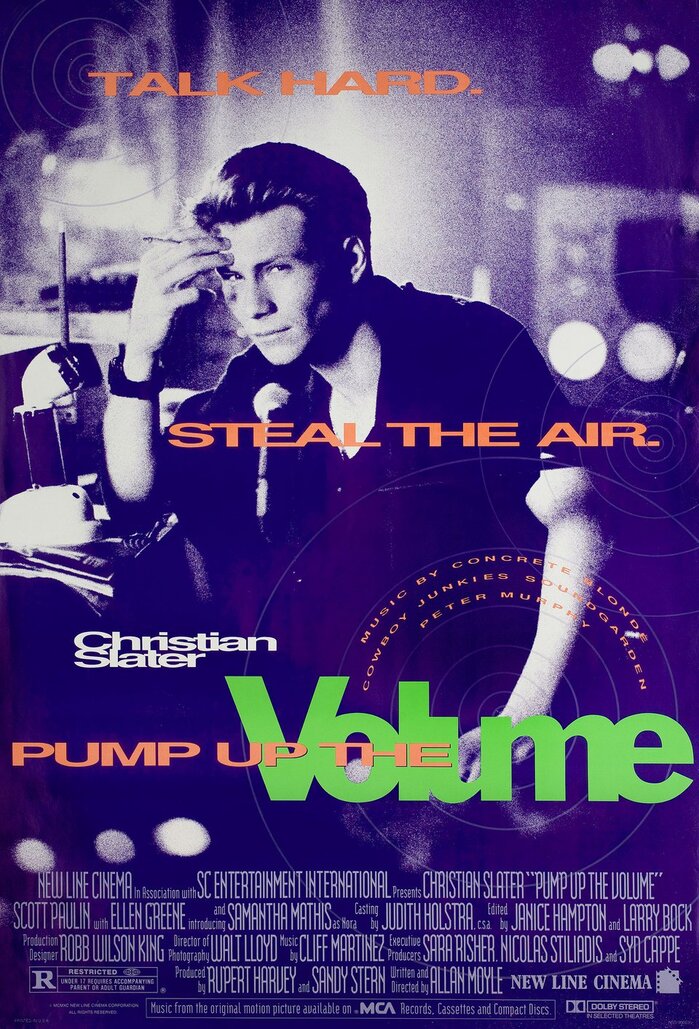
Released in 1990, the film was written and directed by Allan Moyle and stars Christian Slater as Mark Hunter, a painfully shy high school student who recently moved to a suburb outside Phoenix, Arizona. During the day, Mark barely speaks to anyone. At night, he becomes the bold, rebellious voice behind an illegal pirate radio station.
Using the name “Happy Harry Hard-on,” usually shortened to Hard Harry, Mark broadcasts from the basement of his parents’ home. Once the microphone comes on, the quiet student disappears. Hard Harry is funny, angry, inappropriate, honest and completely fearless.
He says the things other teenagers are thinking but don’t feel brave enough to say.
That alone makes the movie entertaining. What makes it powerful is how quickly Mark’s broadcasts become something much bigger than a teenager talking into a microphone.
A Story About Finding Your Voice

Photo by Brett Jordan on Unsplash
At first, Mark’s radio show is mostly a way for him to cope with loneliness, frustration and the pressure of being the new kid. He plays music, makes jokes and talks about school, parents, relationships and everything that makes teenagers feel misunderstood.
Then students begin listening.
They gather around radios each night, waiting to hear what Hard Harry will say next. For many of them, he becomes the only person who seems willing to acknowledge what they’re going through.
As the story develops, Mark uncovers serious problems at his school. Students who may lower test scores or damage the school’s carefully protected reputation are being pushed out. Principal Loretta Creswood, played by Annie Ross, cares more about appearances than the students she is supposed to protect.
The film also stars Samantha Mathis as Nora Diniro, an intelligent and rebellious student who figures out Mark’s secret. Nora isn’t included just to give Mark a romantic interest. She challenges him, supports him and refuses to let him hide behind his radio personality forever.
Scott Paulin and Mimi Kennedy play Mark’s parents, while Ellen Greene plays Jan Emerson, a teacher who begins questioning what is happening inside the school.
The movie becomes more serious when Mark realizes his listeners don’t simply enjoy the broadcasts. They trust him.
Some of them are hurting. Some are angry. Others feel completely alone. They treat Hard Harry like a friend, even though they’ve never met him.
Mark soon learns that having an audience comes with responsibility. He can inspire people, but he can also say something reckless and turn off the microphone without seeing what happens next.
That part of the movie feels even more important in 2026.
Hard Harry Would Fit Right Into Today’s World

Photo by Collabstr on Unsplash
In 1990, Mark needed a transmitter, microphone, cassette tapes and enough technical knowledge to keep the authorities from finding him.
Today, he’d probably need a phone, a social media account and a decent internet connection.
People now use TikTok, YouTube, podcasts and livestreams to talk about school, mental health, politics, relationships and social problems. Anyone can create a platform and reach thousands of people without going through a television station, newspaper or radio network.
In many ways, Mark’s pirate radio show was an early version of the modern podcast or social media channel. He went around the people in charge and spoke directly to an audience that felt ignored by traditional institutions.
However, Pump Up the Volume also shows the dangerous side of having influence.
Mark gains a large audience before he’s emotionally prepared to handle it. He wants to help, but he doesn’t always know what to say. He can encourage someone one minute and unintentionally hurt someone the next.
That feels a lot like social media today.
A person can gain thousands of followers overnight without knowing how to manage the pressure, criticism or responsibility that comes with being heard. Anyone can share an opinion, but that doesn’t mean every opinion is helpful, accurate or safe.
Young people in 2026 may have more ways to communicate than Mark did, but that doesn’t mean they always feel understood.
Having a platform isn’t the same as having someone listen.
That is one of the reasons the movie still works. The equipment may look outdated, but the emotions don’t.
Christian Slater Makes the Movie Work

Copyright: 2015 Getty Images, Creator: Bryan Bedder
Christian Slater is a huge reason Pump Up the Volume remains so memorable.
At school, Mark is awkward, nervous and nearly invisible. Behind the microphone, Hard Harry is confident, magnetic and impossible to ignore.
Slater makes both sides of the character believable.
His radio monologues are filled with attitude, humor and anger, but his quieter scenes show how lonely and frightened Mark really is. Hard Harry may sound fearless, but Mark is still a teenager trying to figure out who he is and where he belongs.
Samantha Mathis is equally strong as Nora. She has confidence Mark lacks, but she also understands that the loud voice on the radio is covering a much more vulnerable person.
Their chemistry gives the film heart and keeps it from becoming nothing more than a collection of rebellious speeches.
The supporting cast also helps make the school feel real. The students aren’t simply stereotypes. They’re young people dealing with pressure, rejection, family problems and the fear that nobody is paying attention.
One of the Best Movie Soundtracks

The soundtrack is another major reason Pump Up the Volume is still my favorite movie.
The music isn’t just playing quietly in the background. It becomes part of Mark’s personality, his broadcasts and the entire mood of the film.
Leonard Cohen’s “Everybody Knows” is one of the songs most closely connected to the movie. Its dark, cynical tone fits Hard Harry perfectly. The official soundtrack includes a powerful version by Concrete Blonde, which gives the song a harder alternative-rock sound.
The soundtrack also includes “Wave of Mutilation (U.K. Surf)” by the Pixies, “Heretic” by Soundgarden and “Titanium Exposé” by Sonic Youth.
Bad Brains and Henry Rollins bring pure energy to “Kick Out the Jams,” while Ivan Neville’s “Why Can’t I Fall in Love” adds a more emotional sound.
Other memorable songs include “Freedom of Speech” by Above the Law, “Me and the Devil Blues” by Cowboy Junkies and “I’ve Got a Secret Miniature Camera” by Peter Murphy.
The movie also features songs that weren’t included on the original soundtrack album. These include Leonard Cohen’s “If It Be Your Will,” Richard Hell’s “Love Comes in Spurts,” Ice-T’s “Girls L.G.B.N.A.F.” and “Scenario” by the Beastie Boys.
It is a strange, gritty and intelligent collection of music, and that is exactly why it works.
The soundtrack doesn’t feel like it was created by a group of executives trying to make every song appeal to everyone. It feels personal, almost like Mark pulled each track from his own collection because it said something he couldn’t put into words himself.
Even now, hearing “Everybody Knows” can take me right back to that dark basement, with the red light glowing, the microphone turned on and an entire town listening in secret.
Why It Remains My Favorite

Photo by New York Said on Unsplash
Pump Up the Volume isn’t a perfect movie, but I think that is part of what makes it so special.
It is messy, funny, angry, honest and hopeful. It believes young people deserve to be heard, but it also reminds us that words carry weight.
More than three decades after the movie was released, many of its questions are still relevant.
Who controls the conversation?
Who gets ignored?
What happens when schools and other institutions care more about protecting their image than helping people?
Can one honest voice encourage others to start speaking for themselves?
In 2026, we live in a world filled with social media personalities, sponsored opinions, artificial intelligence, carefully edited videos and endless online noise.
Mark Hunter wasn’t trying to build a brand. He wasn’t counting likes or trying to please an algorithm. He was trying to survive his loneliness while helping other people feel less alone.
That is why Pump Up the Volume was my favorite movie then, and why it is still my favorite today.
The technology may be outdated, but the message isn’t.
Talk hard.
You can watch Pump Up the Volume on:

Leave a Reply